Field teams don't resist software because they dislike technology. They resist tools that ask them to stop doing construction and start behaving like office workers.
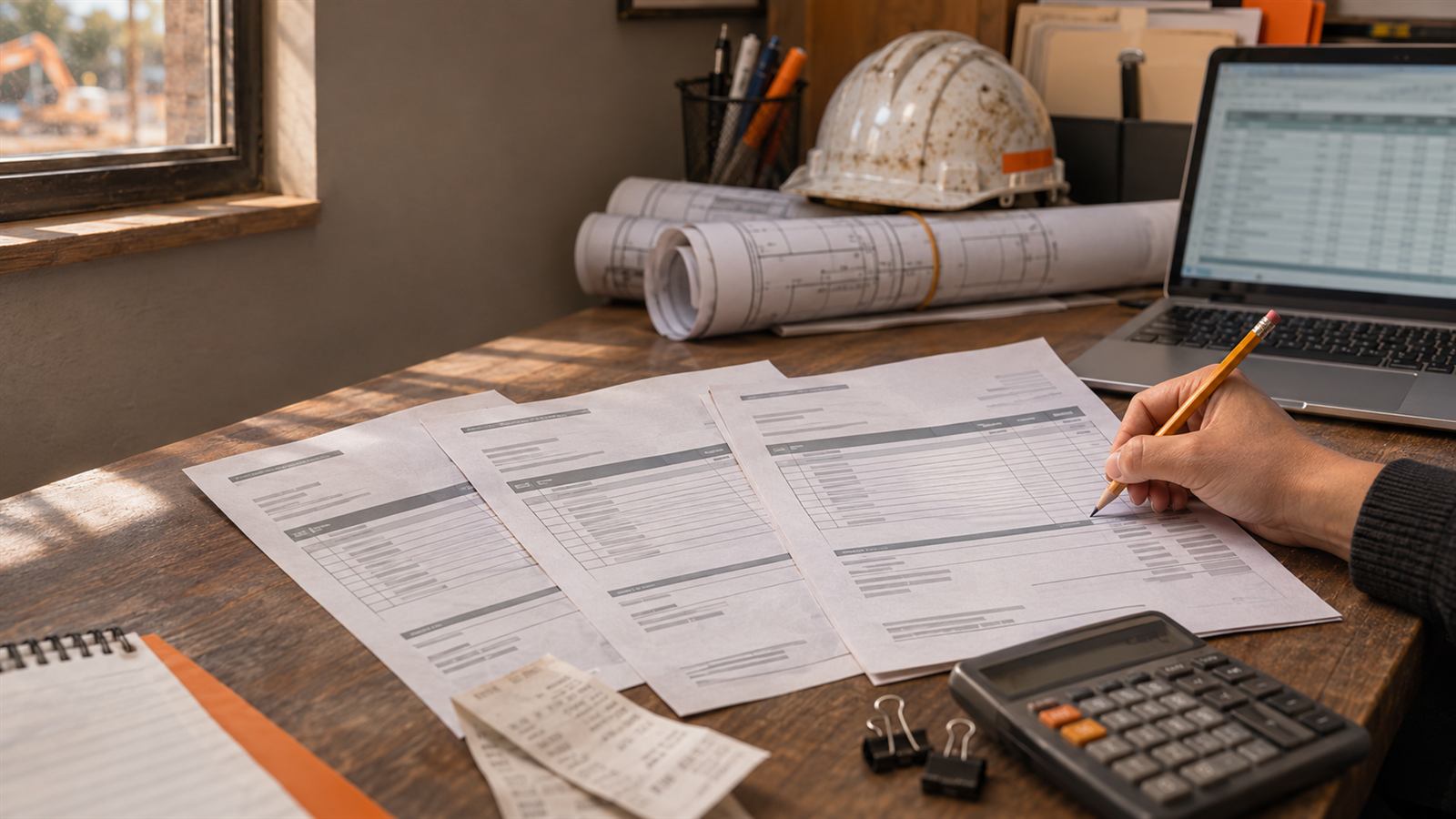
Invoices. Timesheets. Change orders. Daily logs. Meeting notes. Every job throws off a paper trail, and every piece of it needs someone to write it down, track it down, or chase it down later — while the real job doesn't pause. If an hour isn't recorded, it can't be billed. If a change isn't documented, it might not get paid. If a decision is buried in a text thread, someone acts on the wrong information.
The project lives in one person's head
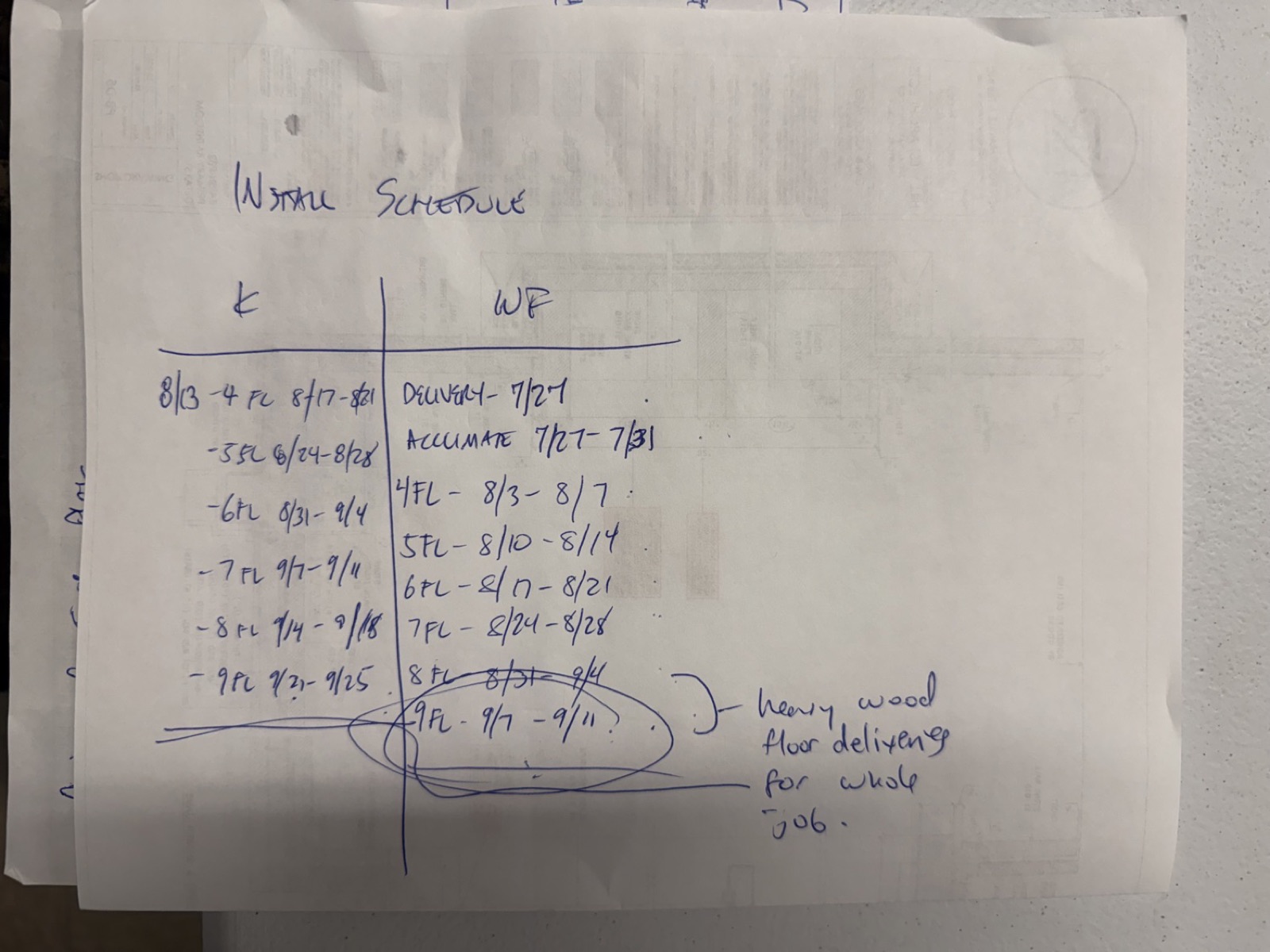
The information is everywhere — inboxes, text threads, marked-up drawings, verbal approvals, the Post-it on the monitor. None of it is organized. Somehow, it's all expected to stay alive in the project manager's memory: which email had the approval, which sub promised a revised price, which conversation changed the scope.
That works — until the PM gets busy, takes a day off, or runs out of mental space.
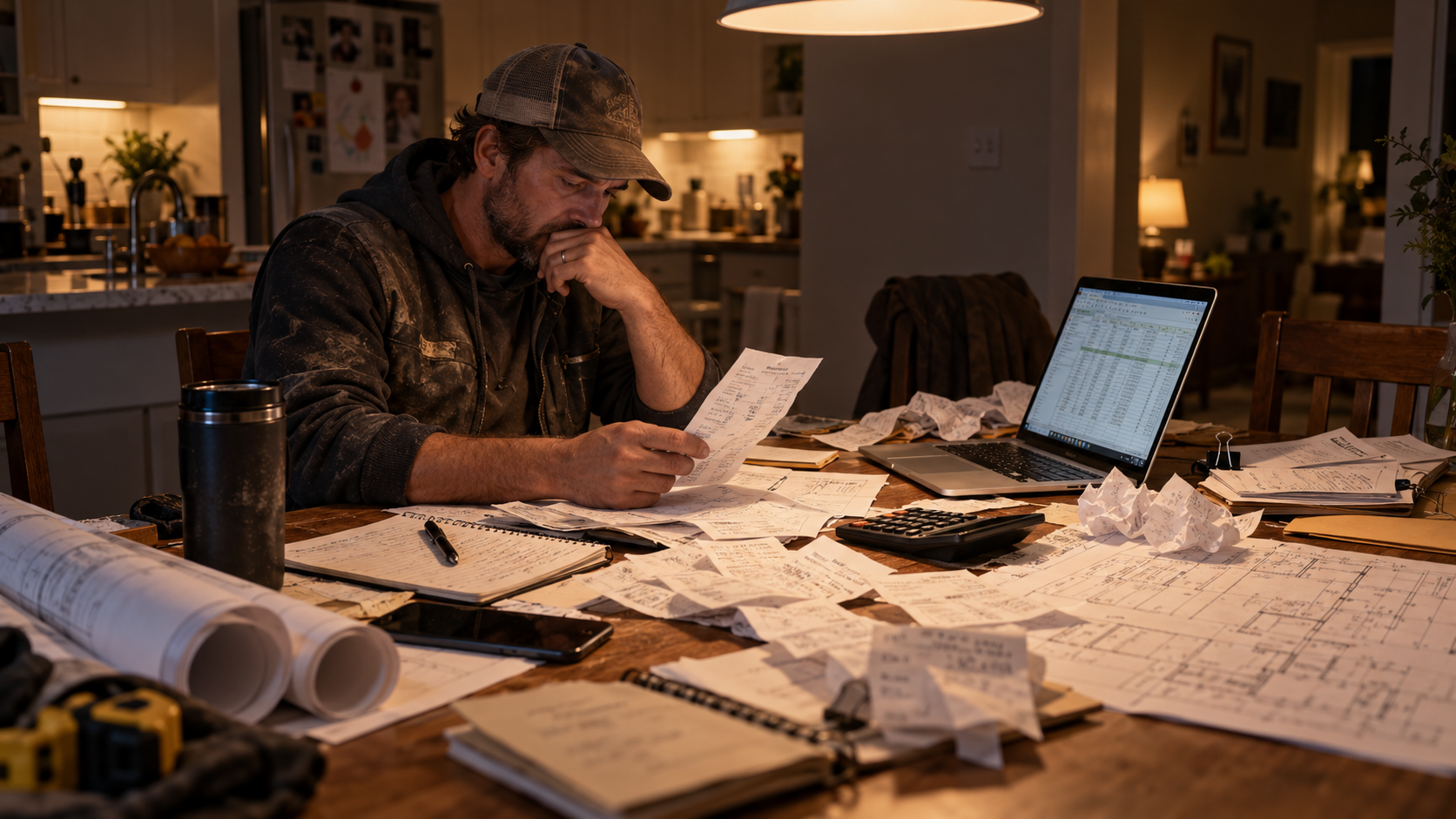
And the homework usually falls on whoever's already carrying the project: the owner working after dinner, the PM reconciling costs at 10 p.m., the superintendent updating a report between field calls, the bookkeeper reconstructing the week from scattered receipts and texts.
More software isn't the fix
The instinctive response is to add another tool — one for estimating, one for time tracking, one for photos, one for accounting. Each solves a narrow problem, but the team is still stuck connecting them: re-entering the estimate into the contract, copying meeting notes into the PM system, matching receipts to the right job.
The software is digital. The work is still manual.
Software should follow the work, not the other way around
Crews already generate the information a job needs — they talk, take photos, send emails, mark up drawings, approve changes. The right software captures that in the flow of work and turns it into something usable: a conversation into an action list, a field photo into a status update, a voice note into a timesheet entry.
The same underlying information should only need to be entered once — not recreated separately for the daily report, the invoice, the change order, and the schedule update.
AI should do the homework, not the judgment
AI can organize a transcript, draft a meeting update, connect a field note to a change order, or prepare an invoice for review. The PM still decides what matters. The estimator still validates the number. The superintendent still knows what's happening in the field.
The goal isn't full automation. It's less friction between doing the work and having a record of it.
A calmer way to run the business
Invoices go out faster because the information is already organized. Change orders don't get abandoned because the approval was captured when it happened. Estimates improve because real job costs are there for comparison. Owners get visibility without chasing people for updates.
The software isn't the point. The work is.
Stop chasing paperwork. Start capturing the job as it happens.